Industrial Hemp Basics
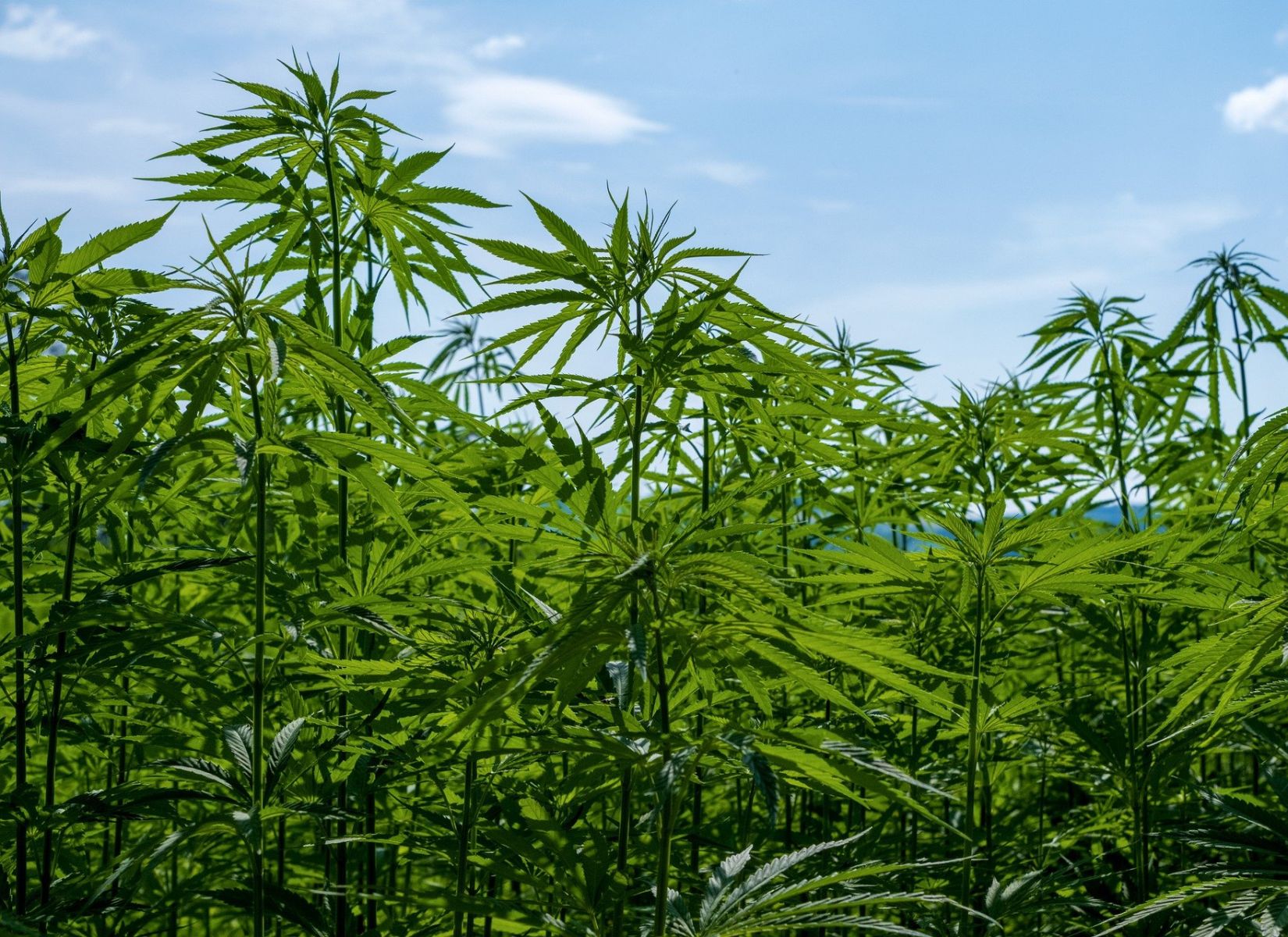
Industrial hemp is made up of varieties of cannabis sativa that contain less than 0.3% THC. It is an annual broadleaf plant with a taproot and is capable of very rapid growth under ideal growing conditions. The female flowers and seed set are indeterminate, meaning that the seeds continue to develop and mature over an extended period of time. This means there are both ripe and immature seeds on the same plants at time of grain harvest.
When grown as a fibre crop, hemp may grow to a height of 2-4 m without branching. In dense plantings, the bottom leaves atrophy due to the exclusion of sunlight. Male plants die back after shedding pollen.
The stem has an outer bark that contains the long, tough bast fibres. They are similar in length to soft wood fibres and are very low in lignin content. These give the quality and strength for which hemp is renowned. The core contains the hurds, or short fibres, similar to hard wood fibres, that are useful in applications like particle board, building blocks and hemp concrete, etc .
For grain production, the plants may branch and reach heights of only 2-3 metres. Tall plants do not necessarily produce more grain than short ones. Shorter plants are preferred for combining.
In well-structured and well-drained soils, the taproot may penetrate 15-30 cm deep. In compacted soils, the taproot remains short and the plant produces more lateral fibrous roots.